The foundations
Bansuri basics
A few foundations to return to every day: a comfortable hold, a clear sound and careful listening. Take these one at a time.
Get to know your flute
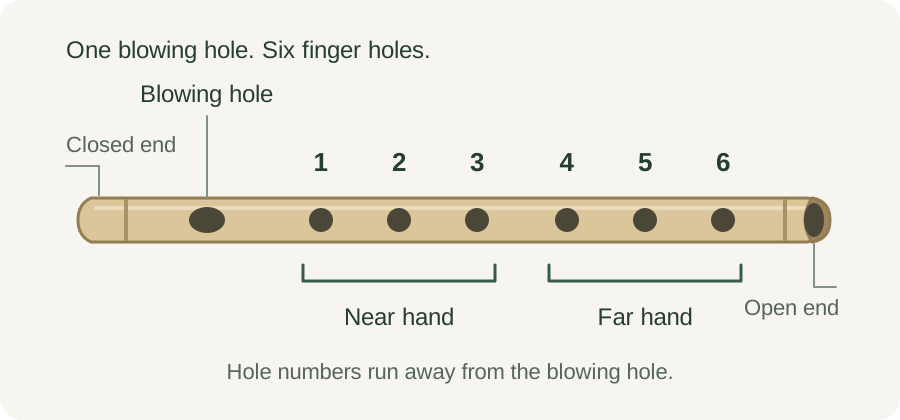
The bansuri is a side-blown bamboo flute. The blowing hole sits near the closed end. This drawing shows a common six-hole instrument; some bansuris have a seventh hole.
The hand nearer your mouth covers holes 1–3. The other hand covers 4–6. Left-handed players can mirror the arrangement. Start with a flute whose holes you can reach comfortably.
Make your first clear sound
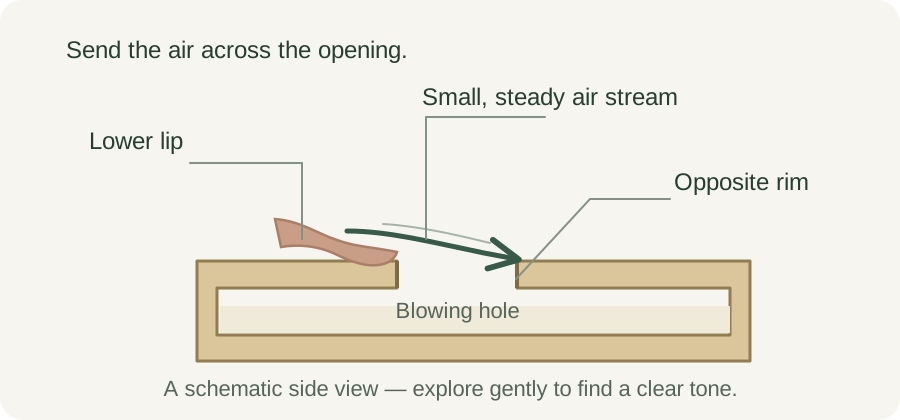
Support the flute with your fingers while leaving the holes open. Rest the blowing hole at your lower lip. Make a small opening between your lips and send a gentle stream of air across the rim.
Try small changes in the flute’s position until a sound appears. A mirror can help. Once it speaks, repeat a few short notes with comfortable breaths between them. Aim for an even sound before trying to hold it longer.
Find a comfortable Sa
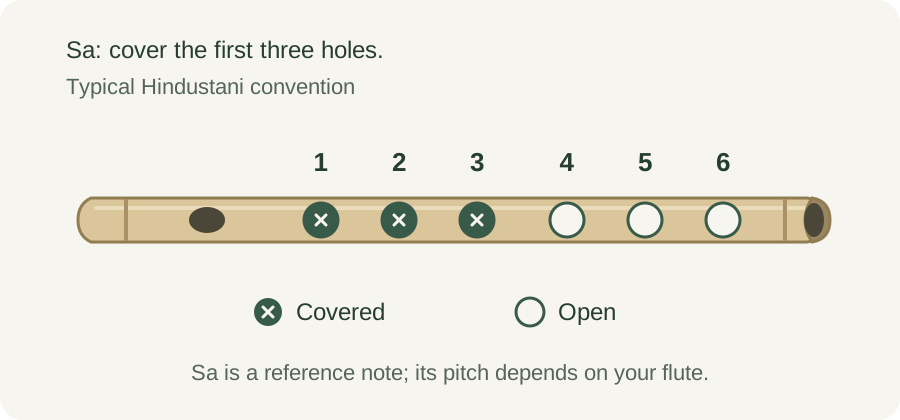
In the common Hindustani fingering convention shown here, Sa uses the three holes nearest the blowing hole covered and the remaining three open. Cover each hole completely with a relaxed finger. Even a small gap can affect the note.
Play a short Sa, listen, then repeat it. A teacher can confirm the fingering and the pitch of your particular flute. Instruments and teaching traditions vary.
Read the swaras in this app
S R G M P D N stand for Sa, Re, Ga, Ma, Pa, Dha and Ni in Hindustani notation. In Swaram Studio, lowercase r, g, d, n mark komal notes and m marks tivra Ma. A dot before a swara marks the lower octave; an apostrophe marks the upper octave.
A dash shows a hold, and an underscore shows a rest. Choose Note details on the practice page to see duration and register. The Carnatic option uses its own swara names.
Set Sa to the tonic used for the melody. This changes the note names on the score; it does not change the pitch of playback. The reference sound is synthesized. Listen to a played bansuri and learn from a teacher for breath, ornamentation and intonation.
Build a small daily practice
Start with a few clear notes on Sa. Then choose a phrase short enough to remember. Listen once, sing or speak its swaras, and play it slowly.
Repeat the same passage a few times, changing only one thing at a time: cleaner hole coverage, a steadier sound or more even timing. Finish by playing it once without the reference sound. Notice one improvement and one thing to revisit tomorrow.
Try a practice phrase or explore the practice journal.